
My father John Fort Walker was a Church of England (Episcopalian) priest, from a well educated but traditional church family – his own father, grandfather and, I think, his paternal great grandfather had all been ‘men of the cloth’. My mother Myrtle came from a prosperous middle class business family, which in 1920s England meant a large but not ostentatious house, grounds, a live-in cook and maid, and a gardener / chauffeur / maintenance man whose domain was outside, cleaning the car and keeping said grounds in order.
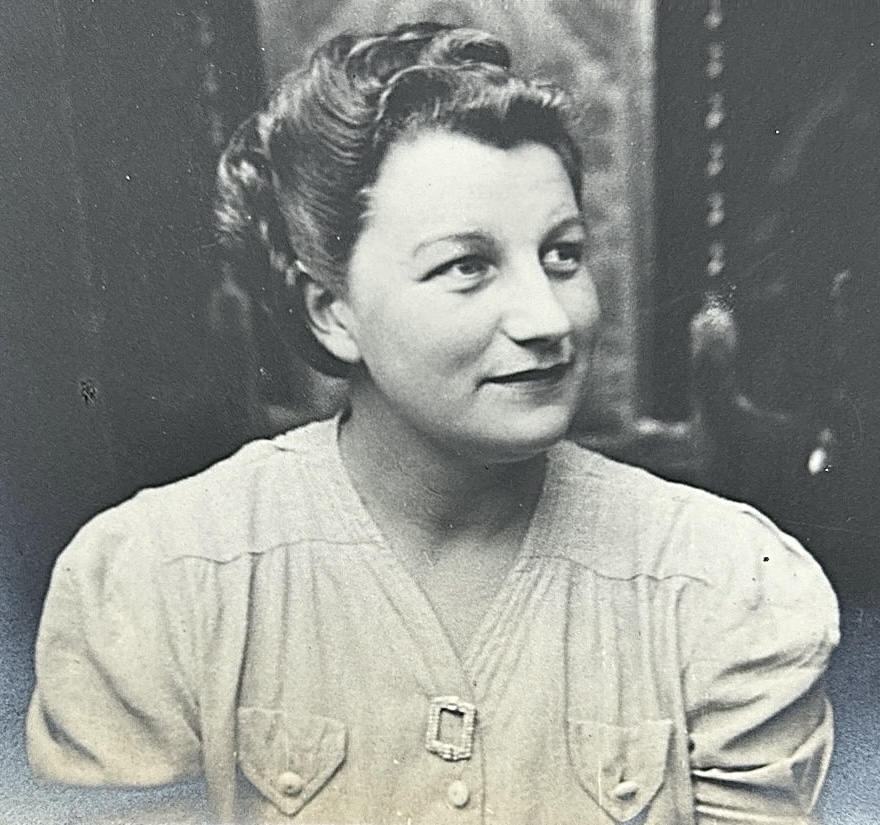
My mother Myrtle, aged 22 in 1939
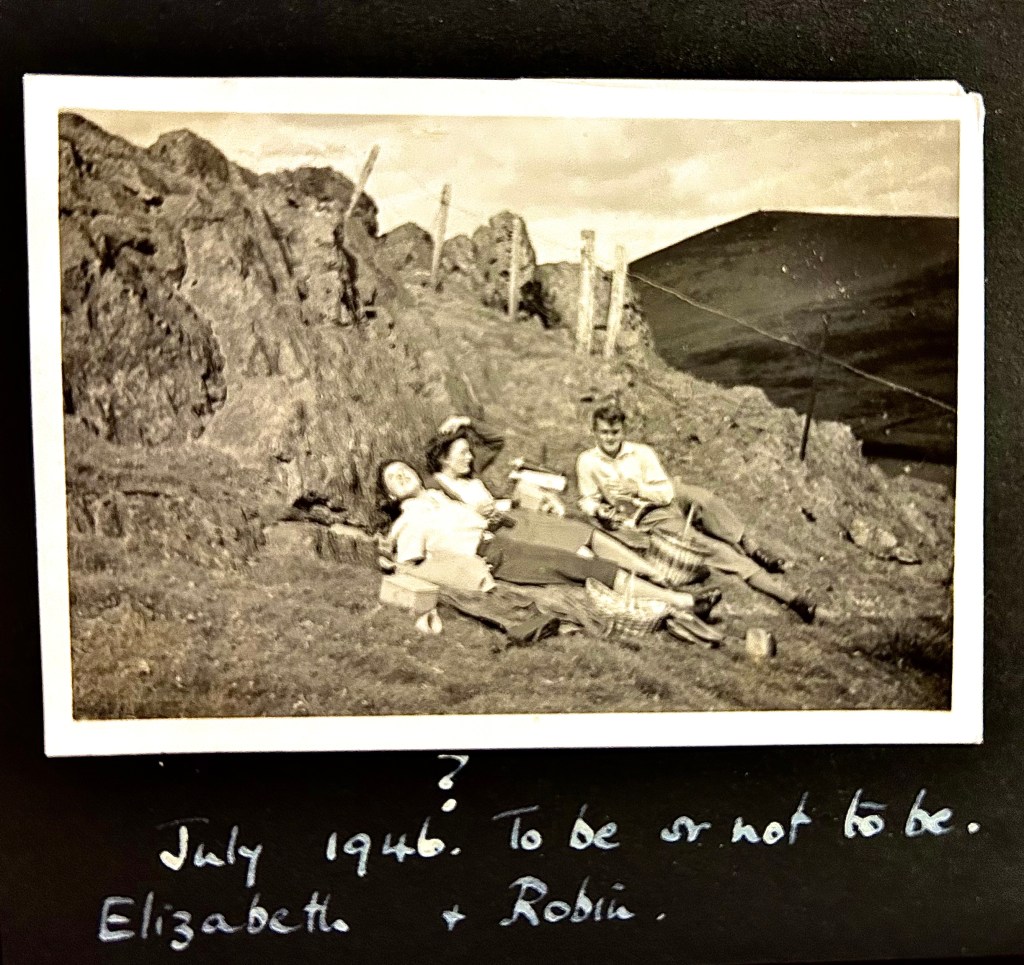
In the bright and optimistic 1930s, Myrtle had dallied with John’s brother Peter, a dashing businessman who drove a Rover and joined the RAF at the outbreak of war. But her long-term attention was drawn to Peter’s quieter and more studious elder brother John, perhaps because of something soulful and a little sad in his dark eyes. She didn’t consider the matter of his Oxford degree in Theology and his subsequent years at Theological College, training to be a priest, much of a hindrance to romance. Church of England priests could get married, couldn’t they? A picnic photograph in the hills above her parents’ holiday cottage in Welshpool, on the Wales / England borders, taken in the summer of 1946, is titled in her careful script on the album page: ‘To be or not to be.’ John had proposed, and in 1947 they were married and honeymooned in Switzerland, walking in the Alps round Zermatt.
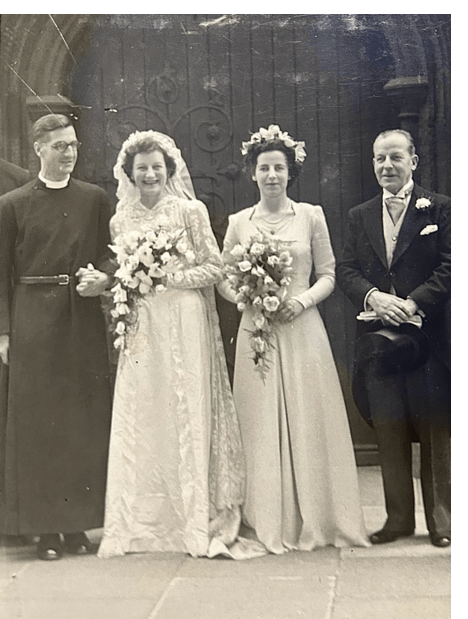
Wedding 9 August 1947. Bridesmaid my Aunty Jo, my grandfather Douglas on her left
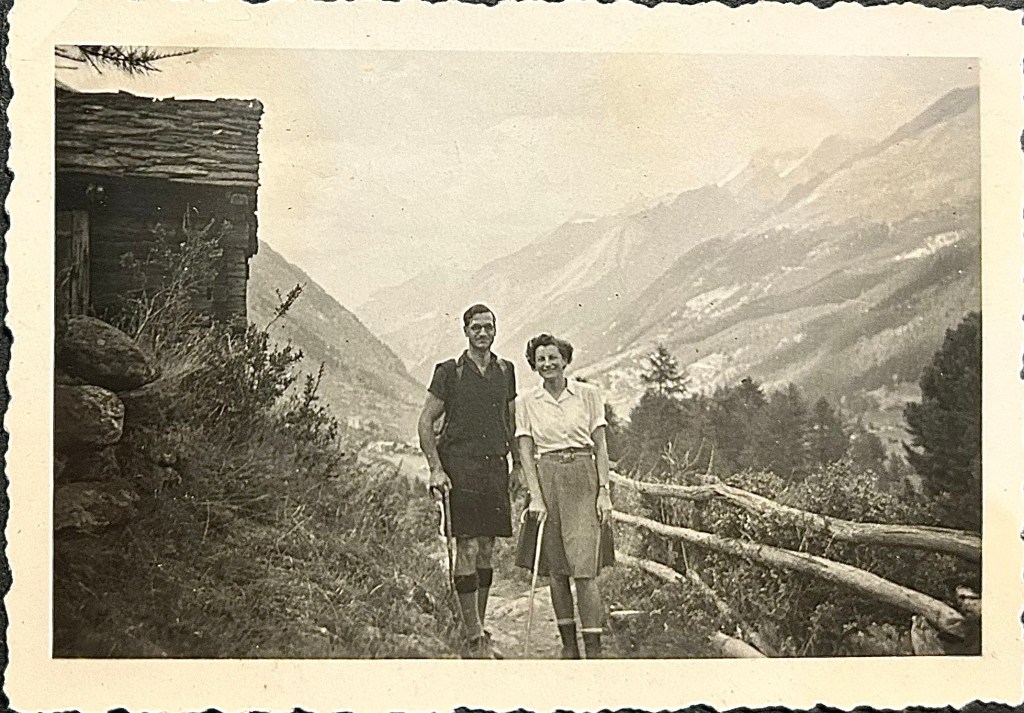
Walking honeymoon in the Swiss Alps, 1947
John’s first ‘living’ had come through, a full-blown vicar’s parish in Sunderland, the gritty and heavily bombed shipbuilding town in the industrial north east where he had served as a curate and an Air Raid Warden, running from house to house while the bombs fell, seeking survivors and getting them to safety. And where I was born, in June 1951, a handful of years after the end of the second world war.
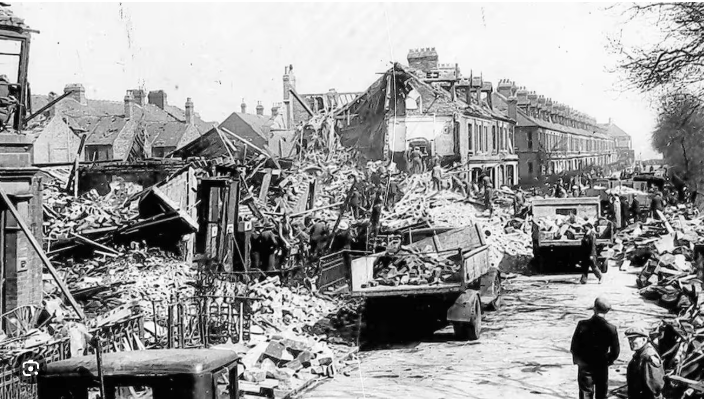
Sunderland, heavily bombed 1941-1944
As genteel Myrtle walked through the front door of St Columba’s Vicarage Southwick, her heart must have fell to her dainty boots. Was she really expected to scrub and whitewash the front door step?
Obviously not. But it was a harsh culture shock for this ‘well brought up’ young woman, who had spent the war as a physiotherapist in London’s St Thomas’ Hospital, bringing wounded soldiers sailors and airmen back to a semblance of mobility and normality, and tasting the desperate gaiety of a wartime city in which liaisons were made and lost in the blink of an eye.
Here was where the shame started. She would never admit it to herself, but she had made a mistake. Her new husband would not only fail to keep her in the comfortably solvent manner to which she was accustomed, but it was a given that he expected her to lead the women’s side of the church community – ‘Enrolling Member’ of the Mothers’ Union, overseer of the flower arranging ladies, visitor to the sick of the parish and a 1000 other unpaid and thankless duties.
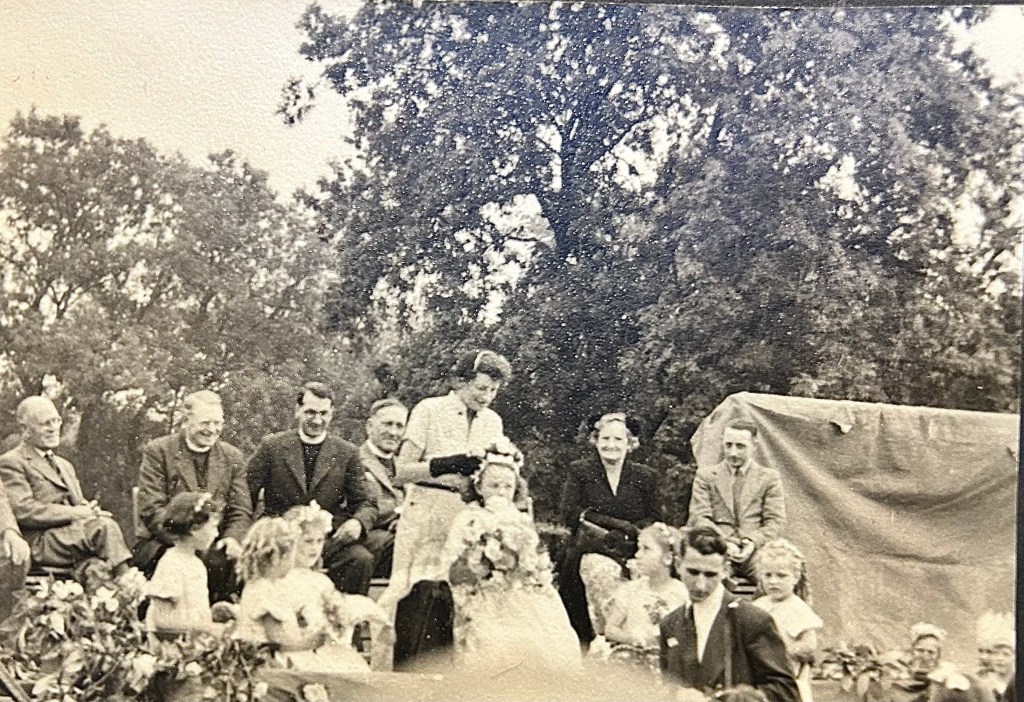
Myrtle crowns the ‘Queen of the Fete’, St Mary’s Cockerton, 1953
I grew up subject to the inadvertent but nonetheless powerful manipulation of the guilt weapon which moribund Christianity, in the form of my father’s practice, his parish and his parishioners, made all too easy to wield. My Mother was already subject to such pressures. A red-cheeked, cheeky, smiling child, I didn’t encounter it until the age of 10 or 11 when my Dad took up the incumbency of St Martin’s Worcester; a sandstone Victorian church built for congregations of 400 – which regularly accommodated congregations of about 20. Ther previous incumbent’s sons had been in the choir, had led the ceremonial procession of cross and choristers that opened the Sunday services. I was not interested, and this indifference came in for a taste of the sly comments that tortured my Mother on a weekly basis: ‘Mr Taylor’s sons were in the choir and led the procession … don’t you want to do that?’ No, fuck you very much, I don’t. I had to tuck my (by no means long) hair behind my ears when I went to Sunday communion just to avoid further malicious gossip on the Rector’s childrens’ behaviour and appearance, and that was quite enough thank you.
The burden fell on my Mother. It was a tiny microcosm of the sort of affliction the English Royal Family has to manage. You are public property, and fair game for any hypocritical busy body who chooses to judge behaviour and appearance aforesaid. She put on a brave face and made the effort, which obviously could never match the the achievements of Mrs Taylor; but all was not well in my parents’ marriage, and she saw incrementally less and less reason to put up with that shit. I recall a moment with family friends walking on the Malvern Hills, the middle-England range of rolling uplands a few miles south of Worcester, when one the elder daughter of the other family pointed out a hole in my Mother’s stocking. ‘Yes, well. that’s what you get when you’re a clergy wife’ said Ma, obviously instantly regretting it and being assailed by… guilt and shame.
Guilt was endemic in our house, in my father’s professional persona and in the institution to which he had dedicated his life. At the risk of overstating and oversimplifying it, Christianity pretty much runs on this fuel, because Catholic, Protestant or Non-Conformist, all subscribe to the doctrine that Christ died for our sins and the only absolution is through him. Only trouble was, his family had not signed up to the same dedication to the Church and its works. In the case of my Mother it led to secret alcoholism – punishing the sherry bottle in the larder (yes, we had a larder, with cool stone shelves and wooden wineracks, largely empty save for the occasional bottle of cheap sherry), and in her retrieving her self respect by returning to her wartime role of senior physiotherapist – at the local mental hospital, it so happens, where my father conducted weekly ‘contemplations’ and indeed where he ended up a patient. He hated my Mum having a job. To him it meant failure as a paterfamilias – he couldn’t support the family. He also hated her pathological hatred of all kitchen activity (except making chocolate cake for us kids) and would secretly complain about the lack of salt in her cooking, while she bashed and bonged the pots and pans in fits of half drunk, silent rage.
My father’s own Mother, of course, had been the exemplary clergy wife; all parish duties efficiently and gracefully performed; roast beef on Sundays, jam making on Mondays, beef leftovers on Tuesdays, stew on Wednesdays, maybe pork chops on Thursdays (also laundry day, complete with boiling whites in the ‘copper), fish on Fridays, jam roly poly on Saturdays to draw attention away from the three-day leftovers. A submissive role – not to ignore its own inherent power – which Myrtle, scion of the self-defining WW2 generation of women who had proved their professional competence and independence – could neither countenance nor copy.
More guilt.
Powick was that local hospital – famous in the 1950s and 60s for its pioneering use of Lysergic Acid Diethylamide as a therapeutic drug. It turned out Powick was pivotal in the thread – this time of shame rather than guilt – which ran through the implosion of my parents’ marriage, my father’s renunciation of the priesthood, and the admission of them both as mental patients – my Dad in Powick, where my Mother worked, and my Mother in one up the road. Clearly she couldn’t be treated as a patient in the hospital where she held a senior clinical position.
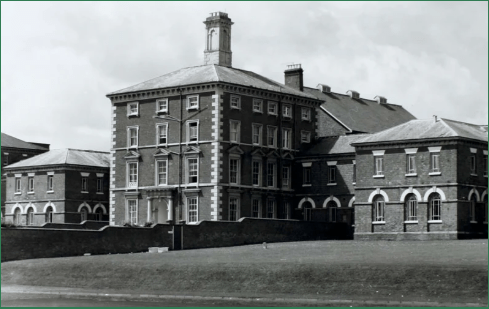
Powick Hospital, originally the ‘Worcester City and County Pauper Lunatic Asylum’, opened in 1852. In the 1950s and 60s it was the site of pioneering LSD therapy
To my mind, both of them suffered from mental breakdown – call it depression, psychosis, whatever the accepted terminology of the day was – because of their refusal to accept what was really happening, in their marriage, in my father’s ministry, and indeed in the social attitudes of the day – late 1960s – which branded mental illness as shameful. My mother tried (unsuccessfully) to convince me and my sister that my father’s incapacitation was ‘just like breaking your leg or having a sore throat’. We knew better. I had already started reading R.D. Laing, partly inspired by my father’s own quasi-heretical interest in the relationship between religious or mystical experience and mental ‘illness’, and partly because of my fascination – in 1967 – with the experimental LSD treatments being held at Powick.
Whatever my father’s guilt and shame about failing in his ministry and his numerous dalliances and semi-affairs, Powick cured him of all that. He didn’t have LSD treatment, but he did have ECT – Electro-Convulsive Therapy – which I witnessed on one occasion. From an ignorant bystander’s point of view, the rationale for the treatment seemed to be ‘if it ain’t working, give it a good bash.’ I will never forget my father’s abject terror as he waited for the electrodes to be slipped over his head.
He emerged from treatment, left the Church, got a job teaching, left my mother and became a happy man, living for the last two years of his life with the daughter of the chief nursing officer of the hospital where he had been a patient and where my mother worked. She descended into a mental fog which never cleared. He was a dark man; black hair right through to his 60s, dark skin, ankle-length black cassock, humour, warmth and affection almost entirely absent. I remember him as black. Except for this last two years of his life, where he became a colourful person; red shirts, red cheeks, cheerful and smiley.
I was confirmed into Christian adulthood – my Dad taught the classes – at the age of 16, and never went to church again. Guilt and shame? No thanks. By the time I went to University I was following Buddhism, moving from there to hatha yoga, and getting my teeth into the idea of karma. Someone else to remove the result of your ‘sin’? No way. That dealt with guilt. Shame, on the other hand, is a much more resilient beast and takes hold of my soul in many insidious ways; the first one of which is my own reluctance / inability / fear to confront my own wrongdoings, as defined by whatever moral / ethical structures I subscribe to.
More to come.

